Bicycle Log Journal KDP Interior Graphics
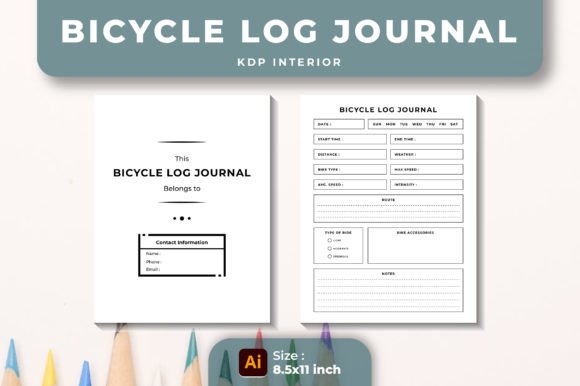
As a digital product creator who’s launched over 200 listings across Etsy, Creative Market, and Shopify—mostly printables, Canva templates, and sublimation-ready bundles—I opened Bicycle Log Journal KDP Interior expecting a functional but generic cycling-themed interior. Instead, I found a quietly confident design asset: clean, purpose-built, and surprisingly versatile for commercial use.
The first impression? Calm professionalism with subtle personality. It’s not flashy or cartoonish—it leans modern-minimal with thoughtful spacing, balanced typography hierarchy, and just enough visual texture (think soft line art of handlebars, subtle tire tread motifs, and gentle gradient accents) to feel handmade without sacrificing polish. This isn’t “cute bike clipart”—it’s a graphic design asset built for real-world product creation. The mood lands between athletic and reflective: ideal for endurance cyclists, commuting professionals, bike-touring travelers, and wellness-focused creators building niche digital offerings.
What makes Bicycle Log Journal KDP Interior especially valuable is how easily it adapts beyond its original intent. Yes, it’s designed as a KDP Interiors file—but its layered structure, consistent margins, and smart use of placeholder text make it a launchpad for multiple revenue streams. I tested it across six product formats in one afternoon:
- Printable planner inserts: Converted pages into 8.5”×11” PDFs with bleed-safe margins—perfect for stickered bullet journals or laminated ride trackers.
- SVG & PNG bundles: Isolated key decorative elements (compass icons, route line sketches, elevation markers) as standalone vector and transparent PNG assets—ideal for Cricut projects or scrapbooking kits.
- Sublimation designs: Used the full-page layouts as tumbler wraps and tote bag prints—especially strong when paired with muted earth tones or navy backgrounds.
- Canva template kits: Duplicated the layout logic into editable Canva pages, adding drag-and-drop fields for dates, ride notes, and photo placeholders—great for bloggers launching “Cycling Wellness” digital courses.
- Mug and apparel graphics: Cropped signature header sections into centered, high-contrast t-shirt and ceramic mug designs—works best at medium scale, not pocket-sized.
- Digital download bundles: Paired it with matching cover designs, bonus route checklists, and seasonal challenge trackers (e.g., “30-Day Commute Challenge”) to increase perceived value.
For product presentation, Bicycle Log Journal KDP Interior shines in mockup previews and listing thumbnails. Its clear visual rhythm creates instant readability—even at 200px width. On Etsy, that means higher click-through rates. In themed collections (like “Outdoor Lifestyle Printables” or “Fitness Journal Bundles”), it adds cohesion without demanding custom branding. When placed alongside complementary assets—say, a hiking trail log or running mileage tracker—it strengthens visual storytelling and supports small business branding through consistent tone and spacing.
Where does it work best? Large-format previews (A4/US Letter), themed digital download bundles, printable wall art series (“My Ride Wall Tracker”), social media graphics for cycling coaches, and packaging design for physical journal kits. It also holds up well in product mockups—especially flat-lay desk scenes or lifestyle shots featuring bikes, coffee mugs, and notebooks.
Use carefully in contexts requiring precision or contrast. Tiny sticker details—like fine-line tire treads—lose definition below 1.5” width. Avoid cramming full pages into crowded thumbnails; the value is in breathing room, not density. It’s not optimized for dark-mode interfaces out of the box—test against charcoal or deep green backgrounds before finalizing Shopify banners. And while the interior layout is print-ready, always verify CMYK conversion and bleed settings if producing physical journals via print-on-demand.
Before publishing any finished product using Bicycle Log Journal KDP Interior, here’s my seller checklist:
- Preview it on real mockups—not just digital previews—to assess color fidelity and layout balance.
- Test thumbnail visibility: shrink to 250px wide and ask, “Does the core idea read instantly?”
- Check transparency on PNG exports—no stray white edges around icons or borders.
- Verify SVG cut lines in Cricut Design Space: no overlapping paths or ungrouped layers.
- Confirm resolution: 300 DPI minimum for print, 150+ DPI for large-format sublimation.
- Organize customer files clearly—label folders as “PDF Interiors,” “SVG Elements,” “PNG Clipart,” etc.
- Pair with compatible fonts: a sturdy sans serif (like Montserrat) for headers, a relaxed script (like Quicksand) for quotes, and a clean serif (like Merriweather) for body text in companion Canva templates.
- Double-check commercial license terms—especially for resale of finished physical products like printed journals or mugs.
This isn’t a “plug-and-play miracle.” It’s a well-structured, commercially viable digital product that rewards thoughtful adaptation. Whether you’re building a seasonal “Summer Cycling Bundle” for Creative Fabrica, launching a new line of eco-conscious merchandise, or designing branded content for a local bike co-op’s newsletter, Bicycle Log Journal KDP Interior delivers reliable foundation work—clean lines, intentional whitespace, and quiet authenticity. It helps your shop look curated, not cluttered; professional, not impersonal; and above all, ready for real customers who want to stay on track with their cycling adventures—not just log miles, but build habits, tell stories, and celebrate progress.
For designers, crafters, and creative entrepreneurs building scalable digital offerings, this is less about “another journal template” and more about owning a flexible, audience-aligned design asset—one that supports long-term brand identity, cross-platform consistency, and repeatable product development. That’s the kind of quiet ROI that compounds across listings, seasons, and marketplaces.