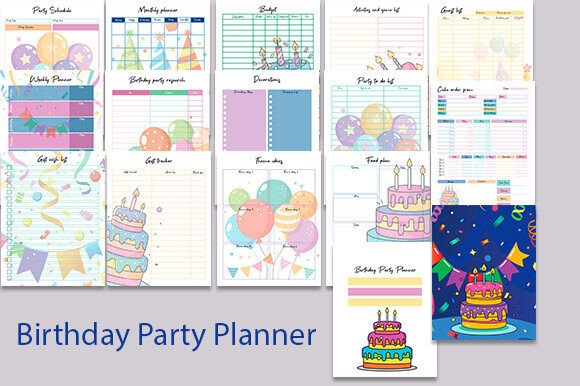
Birthday Party Planner
First Impressions: Joyful, Clean, and Ready for Stitching
Opening the Birthday Party Planner file feels like flipping open a cheerful party invitation—light, intentional, and full of warmth. It’s not overly busy or cartoonish, but it carries unmistakable celebration energy: rounded letterforms, subtle decorative accents (think tiny confetti bursts or balloon silhouettes), and balanced negative space. As an embroidery designer who’s stitched hundreds of themed layouts—from baby onesies to boutique aprons—I immediately sensed this design leans into versatility over novelty. It doesn’t scream “toddler birthday” or “adult milestone”—it invites personalization instead. That flexibility is gold for Etsy sellers, craft fair vendors, and small shop owners building cohesive seasonal collections.
A Real Project Test: Embroidering It on a Linen-Cotton Kitchen Towel
Last week, I used Birthday Party Planner on a natural linen-cotton blend tea towel for a local bakery’s “Bake & Celebrate” gift bundle. Hooped with medium-weight cutaway stabilizer and stitched in soft matte cotton thread, the result held up beautifully—even after two rounds of gentle machine washing. The layout’s generous spacing between words prevented stitch crowding, and the moderate fill stitch density kept fabric drape intact. No puckering. No thread nesting. Just clean, confident lettering that read clearly from three feet away. Customers commented on how “handmade but polished” it felt—not stiff or mass-produced. That’s the quiet power of a well-considered machine embroidery design: it elevates the finished product without demanding attention away from the item itself.
Where It Shines (and Where It Needs Thought)
Birthday Party Planner works especially well for:
- Custom apparel: Sweatshirts, crewneck tees, and relaxed-fit totes—its open layout breathes on thicker fabrics and avoids distortion on seams or side panels.
- Personalized gifts: Baby onesies, nursery pillows, and embroidered patches for backpacks or denim jackets. The tone feels inclusive—not too young, not too formal.
- Small business merchandise: Think café aprons, boutique shopping bags, or holiday gift tags. It pairs naturally with minimalist branding and prints cleanly in mockups.
- Digital product previews: As a digital embroidery file, its clean lines translate crisply into printable mockups—no pixelation, no guesswork when showing clients or listing on Etsy.
But let’s be real: not every surface is forgiving. Use caution with:
- Curved or tight areas—like cap fronts or toddler hat brims—where letter spacing may compress visually or require manual digitizing tweaks.
- Thin or stretchy fabrics (e.g., lightweight knits or rayon blends) unless paired with firm tear-away + topping combo—some decorative elements could sink or blur without support.
- Dark or textured backgrounds: While the design isn’t overly fine, tiny accent details (like dot clusters or thin stems) may soften on heavy terry cloth or black fleece. Always test on scrap first.
- Products needing frequent laundering: Confirm thread colorfastness and consider satin stitch reinforcement on high-friction zones (e.g., tote bag handles).
Design Integrity Meets Commercial Practicality
What sets Birthday Party Planner apart isn’t flash—it’s functional cohesion. As a graphics asset under Kdp Interiors’ catalog, it respects embroidery’s physical limits: no micro-thin strokes, no overlapping layers that trap thread, no dense fill zones that overwhelm home machines. That means fewer stops mid-stitch, less thread breakage, and smoother transitions between satin and fill stitch regions. For a craft business owner juggling ten orders at once, that reliability saves time—and builds trust. When your customer unwraps a sweatshirt with crisp, even embroidered patch-level clarity, they’re not just buying a gift—they’re buying confidence in your process.
It also supports brand consistency. Whether you’re selling handmade baby embroidery or launching a line of celebratory kitchen linens, Birthday Party Planner fits quietly into your visual language—not as a standalone gimmick, but as a thoughtful, repeatable design asset. I’ve layered it beside monogrammed initials on pillow covers and paired it with simple floral motifs on tea towels—never competing, always complementing.
Practical Designer Notes Before You Stitch
Before committing to production—or listing a finished item on Etsy—here’s what I always do with a new embroidery file like this:
- Run a test on scrap fabric matching your final substrate—especially if using textured, dark, or stretchy materials.
- Check thread color contrast: try both light-on-dark and dark-on-light mockups to see where detail holds best.
- Review stitch density in the software preview—look for any unusually tight clusters near corners or curves.
- Confirm hoop size compatibility. If you’re stitching on caps or youth apparel, verify the design fits comfortably within your smallest standard hoop.
- Zoom in on small accents—dots, balloon strings, tiny stars—to ensure they’ll resolve cleanly at your intended size.
- Use proper stabilizer: medium cutaway for stable wovens, tear-away + topping for knits or delicate surfaces.
- Double-check licensing terms—especially if planning to sell finished items or resell the digital file as part of a craft bundle.
Remember: great embroidery isn’t about complexity—it’s about clarity, consistency, and care in execution. Birthday Party Planner gives you the foundation. Your judgment, testing, and attention to fabric and thread make it memorable.