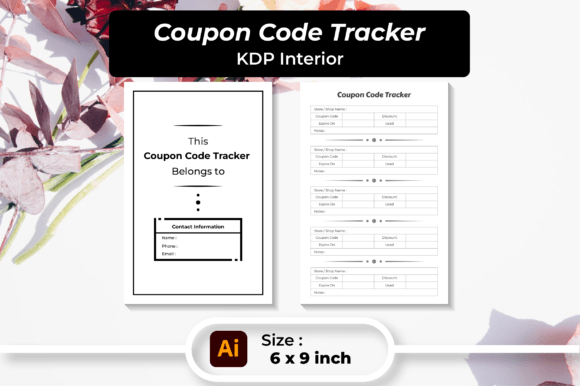
Coupon Code Tracker KDP Interior
A Designer’s First Look: Playful, Practical, and Ready for Real Stitching
When I opened Coupon Code Tracker KDP Interior for the first time, my eye went straight to its clean layout and friendly typographic rhythm—not flashy, not fussy, but unmistakably *functional*. As someone who stitches everything from boutique aprons to baby onesies, I appreciate when a design feels like it was made for use, not just display. This one reads like a cheerful kitchen memo pad translated into stitchable form: light on ornamentation, strong on legibility, and built around space for real-world interaction (like writing in codes or dates). It leans into the “organized joy” vibe—think handwritten charm meets modern minimalism—and that makes it unexpectedly versatile across embroidery projects.
Where It Shines: Tote Bags, Tea Towels, and Thoughtful Gifts
I recently tested Coupon Code Tracker KDP Interior as the centerpiece of a custom embroidered canvas tote for a local small shop owner who sells sustainable home goods. We stitched it front-and-center on a medium-weight natural cotton canvas, using a light tear-away stabilizer and 40-weight polyester thread. The result? Crisp, readable, and quietly confident—exactly what her brand needed. It worked beautifully on the tote because the design’s open spacing gave the fill stitches room to breathe, and the letterforms stayed distinct even at 3.5 inches wide.
It’s also a natural fit for tea towels, pillow covers, and nursery-themed kitchen decor—especially when paired with coordinating embroidery like tiny shopping bags or price tags. I’ve seen crafters adapt it for baby shower gifts (stitched onto a soft cotton burp cloth with pastel threads), holiday gift sets (embroidered on linen napkin sets), and even as a subtle interior detail on reversible aprons. Because it’s categorized under Kdp Interiors and labeled a Graphics file, it’s clearly intended as a clean, scalable asset—not an intricate motif—but that’s its strength. It doesn’t compete with fabric texture; it complements it.
Where to Proceed with Care
That said, Coupon Code Tracker KDP Interior isn’t equally forgiving across all surfaces. On stretchy fabrics like jersey knit (think sweatshirt cuffs or baby bodysuits), the text areas need extra stabilization—preferably cut-away plus topping—to prevent puckering around fine lettering. On dark fabrics, contrast becomes critical: small caps or thin strokes can disappear if thread color lacks enough value difference. I recommend testing your chosen thread colors on scrap fabric first, especially for commercial embroidery where consistency matters.
Curved surfaces—like the front panel of a structured cap—require thoughtful placement. The design’s horizontal flow works best on flat or gently contoured areas. Avoid stitching it across seams or over darts, where distortion can blur the clean lines. And while it’s not overly dense, the fill-stitch sections (like underlined headers or shaded boxes) do carry more thread weight than a simple running-stitch border—so lightweight or sheer fabrics may need additional backing to avoid show-through.
Design Notes Every Embroidery Professional Should Check
- Test before committing: Run a sample on scrap fabric matching your final project’s weight and stretch.
- Review stitch density: Look for tight clusters in small text—adjust underlay or reduce density if needed for breathability.
- Confirm hoop size compatibility: Measure the design’s widest point against your standard hoops; some versions may exceed 4×4 without scaling.
- Inspect corner clarity: Rounded corners and subtle shadows should hold shape—check for skipped stitches or jagged edges in satin-stitch transitions.
- Mock it in black and white: View your digital preview in grayscale to assess contrast and hierarchy before stitching.
- Stabilizer strategy: Light to medium cut-away works best for most apparel; tear-away is sufficient for stable home goods like towels or pillow covers.
- Licensing awareness: Since this is a Kdp Interiors graphic, verify whether the license permits commercial use of finished products—or resale of the digital embroidery file itself—before listing on Etsy or in your small shop.
How It Elevates the Finished Product—Beyond Just Looks
What makes Coupon Code Tracker KDP Interior more than just another machine embroidery design is how it supports intentionality. When stitched onto a handmade product, it signals thoughtfulness—not just decoration. A customer receiving a personalized embroidered tote with this tracker knows you considered *how they’ll use it*, not just how it looks. That builds trust. For Etsy sellers and craft fair vendors, it adds narrative value: this isn’t mass-produced clip art; it’s a functional detail that invites engagement. Even in digital previews or printable mockups, its balanced proportions and clear typography help buyers visualize real-life use—boosting conversion without overpromising.
Professionally, it holds up well in branding contexts too. Paired with a cohesive color palette and complementary stitch motifs (like a simple shopping bag icon or minimalist barcode), it strengthens brand consistency across custom apparel, patches, and small shop merchandise. And because it avoids excessive detail, it scales cleanly—from a 2-inch version on a child’s cap to a bold 5-inch statement on a linen wall hanging.
Final Thought: A Quietly Smart Design Choice
Coupon Code Tracker KDP Interior won’t wow with complexity—but it earns respect through reliability. It’s the kind of embroidery file that disappears into the background of great work, supporting function without demanding attention. For designers building a library of practical, sale-ready assets—or for crafters stitching meaningful, usable gifts—it’s a grounded, human-centered choice. Just remember: know your fabric, test your threads, honor your stabilizer, and always ask how the person holding the finished product will *feel* when they see it—and use it.