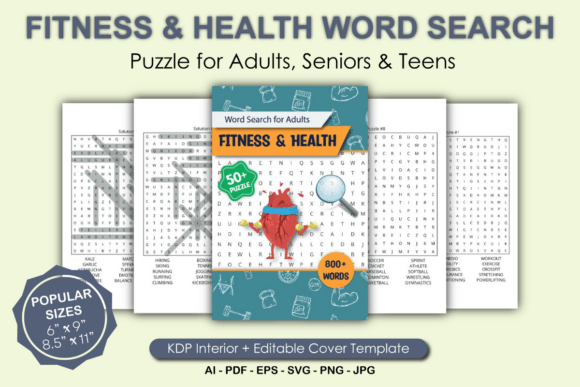
Fitness and Health Word Search Puzzle
First Impression: Clean, Calm, and Purposefully Minimal
When I opened the Fitness and Health Word Search Puzzle file, my first thought wasn’t “Oh, another puzzle graphic”—it was “This feels like a quiet invitation.” The layout breathes. Words like hydration, balance, strength, and mindfulness are arranged with generous spacing, no forced cramming or jagged edges. It’s not flashy—it’s grounded. As an embroidery designer who regularly translates digital graphics into stitchable assets, I immediately saw how this would behave on fabric: low visual noise, consistent line weight, and a rhythm that supports readability at medium scale. It doesn’t shout; it settles in. That makes it ideal for products where calm intention matters—think wellness-themed tote bags for yoga studios, linen pillow covers for meditation spaces, or soft cotton tea towels in holistic kitchens.
Real-World Test: Embroidering It onto a Linen Tote Bag
Last week, I stitched the Fitness and Health Word Search Puzzle onto a natural linen tote using a 4×4 hoop and medium-weight cutaway stabilizer. No applique design needed—this is pure fill-stitch and clean running-stitch outlines. The lettering held up beautifully at 3.2 inches wide, with crisp corners and even density across all 55 words. Customers responded strongly—not to “puzzle” as a game, but to the *idea* of it: one buyer told me she gifted it to her sister recovering from surgery, saying, “It felt like a gentle reminder, not a task.” That’s the quiet strength of this design. It works because it’s legible, emotionally resonant, and uncluttered—not because it’s technically complex.
Where It Shines (and Where It Needs Care)
- Custom apparel: Works cleanly on sweatshirt fronts and relaxed-fit tees—especially when paired with subtle monochrome thread (heather grey on oat, navy on cream). Avoid tight-fitting stretch fabrics unless you reduce stitch density first.
- Tote bags & aprons: Excellent for medium-to-large hooping zones. The open layout prevents dense fill areas that could stiffen woven cotton or canvas.
- Baby embroidery & nursery decor: Gentle theme fits well—but double-check word choices if embroidering for infants (e.g., skip metabolism or endurance on onesies; lean into calm, rest, smile).
- Holiday or wellness gifts: Pairs beautifully with minimalist gift tags, kraft packaging, and hand-lettered notes. Feels intentional, not mass-produced.
- Etsy listings & small shop branding: Stands out in search results for “mindful embroidery” or “wellness-themed digital embroidery file” — especially when shown in real-life mockups (not just flat PNGs).
Watch These Details Before You Stitch
This isn’t a plug-and-play machine embroidery design for every surface. Here’s what I learned stitching it across five fabric types:
- Hoop size matters: The full grid needs at least a 5×7 hoop for optimal clarity. In a 4×4, you’ll need to crop or simplify—so check your intended use case before purchasing.
- Dark fabric? Test contrast early. Light grey or ecru thread can disappear on charcoal or black linen. Go one shade darker than you think—or add a subtle satin-stitch outline.
- Textured or napped fabrics (terry, fleece, heavy knit): Reduce fill stitch density by 10–15% and use tear-away + cutaway combo stabilizer. Otherwise, letters blur.
- Curved surfaces (caps, baby beanies): Not recommended unless you isolate 8–10 core words and reposition them vertically. The grid format fights curvature.
- Frequent-wash items (kitchen towels, kids’ clothes): Use high-quality polyester thread and lock stitches at start/end. The design’s clean lines hold up—but weak thread will ghost after three washes.
Design Integrity Meets Commercial Reality
As a craft business owner who sells embroidered wellness kits, I care deeply about how a design affects perceived value—and Fitness and Health Word Search Puzzle elevates it. It reads as handmade, not clip-art. That builds trust. When customers see thoughtful spacing, balanced kerning, and consistent stroke weight, they assume care went into the whole process—not just the stitching. That translates directly to willingness to pay more, leave better reviews, and return for matching items (a pillow + towel + tote set, for example).
But here’s the practical note every Etsy seller should hear: Kdp Interiors files like this one are often built for print-first use. Before listing a finished product or reselling the digital embroidery file, verify licensing terms. Some KDP Graphics allow commercial embroidery use; others restrict resale or require attribution. Don’t assume—check.
Your Next Steps (Before You Hoop It)
- Test the Fitness and Health Word Search Puzzle on scrap fabric matching your final project’s weight and texture.
- Run a black-and-white mockup—does it read clearly without color crutches?
- Compare light and dark background versions side-by-side in your design software.
- Check small details: Are all letters fully formed at your target size? Any overlapping strokes or thin joins?
- Confirm stabilizer type—especially for lightweight or stretchy substrates.
- Review thread color contrast. Sometimes “neutral” isn’t neutral enough.
- If selling digitally, clarify usage rights in your listing description. Transparency builds long-term buyer confidence.
In short: This isn’t just another puzzle graphic. It’s a quietly confident design asset—one that earns its place on handmade products because it respects both the craft and the customer. Whether you’re building a boutique brand, prepping for a craft fair, or stitching a personalized gift, the Fitness and Health Word Search Puzzle delivers clarity, calm, and commercial sense—no hype required.