Hidato: A Clean, Clever Embroidery Design for Thoughtful Makes
As a designer who’s stitched everything from nursery quilts to boutique aprons—and reviewed hundreds of digital embroidery files—I approached Hidato with quiet curiosity. Not as another puzzle graphic, but as a potential design asset: something that could live on a linen tea towel, anchor a baby onesie, or elevate a small-batch tote bag sold at a local craft fair. What I found wasn’t flashy—but it was quietly capable.
First Impression: Calm, Clear, and Craft-Ready
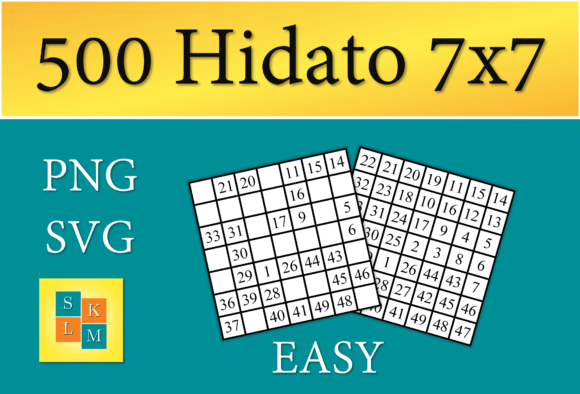
Hidato lands with gentle authority. Its 7×7 grid structure reads as intentional—not cluttered, not sparse—just balanced. The lines are clean, the spacing generous, and the overall shape sits comfortably within a square or near-square frame. It doesn’t scream for attention; instead, it invites pause. That makes it ideal for products where subtlety is strength: minimalist sweatshirts, understated kitchen linens, or personalized baby gifts where charm lives in restraint.
I tested it mentally on a natural-linen pillow cover—no bold colors, just ecru thread on oat-colored fabric. The result? A quiet focal point that feels handmade *and* thoughtful—not like clip art dropped in, but like a detail chosen with care.
Where Hidato Shines in Real Embroidery Projects
This isn’t a design built for maximalist jackets or glitter-heavy festival gear. Hidato excels where clarity, calm, and quiet intelligence matter:
- Embroidered tote bags—especially for bookshops, indie cafés, or teacher gifts—where the grid becomes a subtle nod to curiosity and learning.
- Baby items like onesies or burp cloths: its easy-level logic feels playful but never juvenile, and the open layout avoids overcrowding delicate fabrics.
- Kitchen textiles—tea towels, aprons, oven mitts—where legibility matters after repeated washes and the grid’s symmetry echoes classic textile motifs.
- Small-batch holiday gifts, like embroidered bookmarks or mini pillow covers for puzzle lovers—it’s distinctive without being niche to the point of exclusion.
- Digital product previews for Etsy sellers building KDP puzzle books or printable activity kits—Hidato works beautifully in grayscale mockups and translates cleanly to print-ready layouts.
As a machine embroidery design, it avoids the pitfalls of over-detail: no micro-lettering, no fragile connecting lines, no nested shapes that vanish under satin stitch. That means fewer re-hooping moments, less thread breakage on mid-weight cotton or linen blends, and smoother transitions across curved surfaces like caps or tapered pillow edges.
Use With Care: Practical Limits You’ll Notice Stitching
That said—Hidato isn’t universally forgiving. Its strength lies in simplicity, so it asks for thoughtful pairing:
- Avoid ultra-small hoops (under 4” diameter) unless you’re willing to scale down and risk losing grid definition. At full size, it needs breathing room.
- Thin or highly textured fabrics (like burlap or slubbed linen) may blur line integrity—test stitch density and stabilizer choice carefully.
- Stretchy knits require extra stabilization and possibly reduced stitch speed. The grid’s geometry relies on consistent tension; distortion flattens its appeal.
- Dark fabrics demand high-contrast thread—ecru on navy won’t read. Try charcoal gray or crisp white for reliability.
- Layered garments (e.g., hoodies with thick fleece backing) may mute fine interior lines—consider simplifying inner grid strokes if your file allows editing.
It also doesn’t lend itself to applique design treatment. There’s no central motif to cut and layer—its value is in its wholeness. So skip the raw-edge fabric inserts and lean into precise fill and running stitch execution instead.
What It Adds to Your Finished Product—Beyond the Stitch
Using Hidato thoughtfully raises perceived value—not through flash, but through intentionality. Customers notice when a design feels *designed*, not assembled. On a handmade product, it signals care. On an Etsy listing, it supports brand consistency for shops focused on mindful making, education, or quiet luxury.
It also builds trust: parents buying baby embroidery appreciate clean lines that won’t snag tiny fingers; teachers ordering classroom totes want durability and readability; craft fair shoppers respond to pieces that feel both clever and warm. Hidato delivers that balance—without needing explanation.
Designer Notes Before You Stitch
Before committing to your first run, do these five things:
- Test on scrap fabric matching your final substrate—especially if using textured, dark, or stretchy materials.
- Check thread color contrast in natural light *and* under indoor lighting—what reads well on screen may fade on fabric.
- Review stitch density: if the file includes fill areas, ensure they’re breathable enough for lightweight fabrics.
- Confirm hoop size compatibility—this is especially important if combining Hidato with other designs in a KDP Interiors collection or custom layout.
- Verify licensing terms for commercial use—since this is listed as a Graphics asset for KDP and private business purposes, confirm whether resale of finished embroidered goods or digital bundles is permitted under your purchase agreement.
And one more thing: try stitching it in black thread on white fabric *and* white thread on charcoal. Compare both. You’ll quickly see which version best serves your product’s voice—whether it’s crisp and modern, soft and organic, or quietly scholarly.
Final Thought: A Design That Works Quietly, But Well
Hidato won’t dominate a room—but it might make someone pause, smile, and say, “I get this.” That’s rare. In embroidery, where every stitch carries weight and wear, choosing a design that balances visual calm with quiet intelligence pays off across projects: from a single embroidered patch to a full line of boutique kitchen goods. It’s not loud. It’s not trendy. It’s simply, solidly, ready to work—thoughtfully, cleanly, and well.