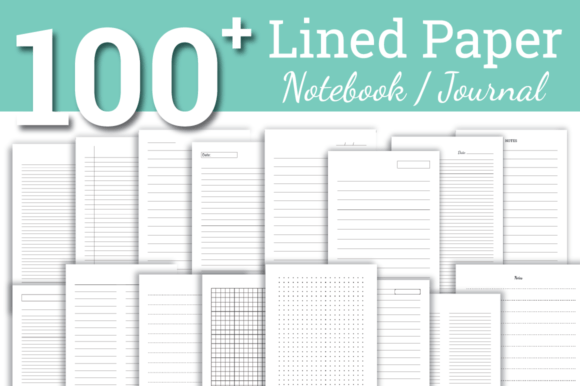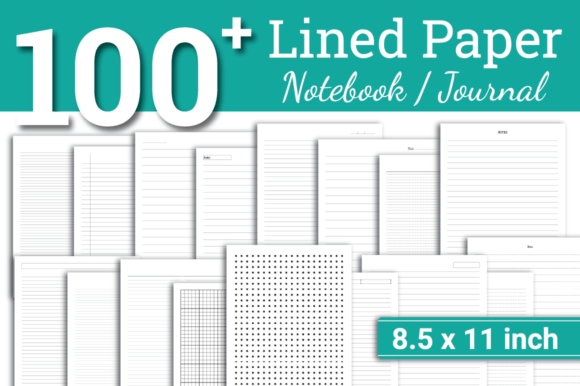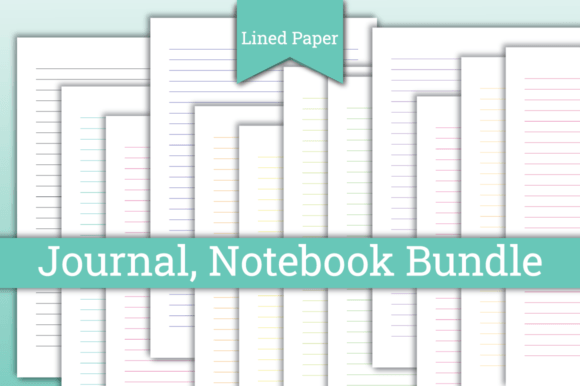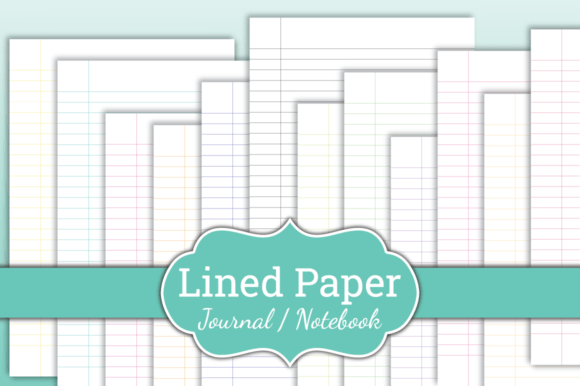
Printable Lined Paper, Notebook Journal
A Designer’s First Glance: Clean, Quiet, and Surprisingly Versatile
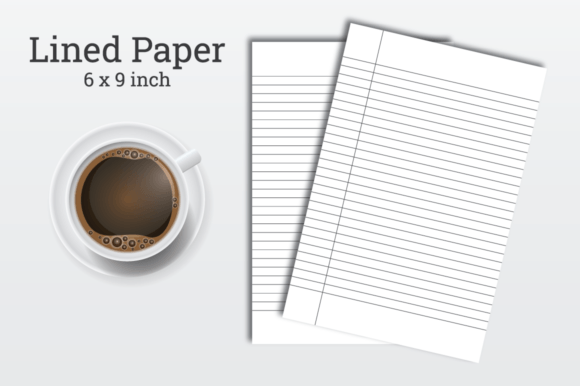
When I opened the Printable Lined Paper, Notebook Journal files, my first thought wasn’t “Oh, another notebook graphic”—it was “This could actually work on fabric.” The design carries a gentle, grounded energy—like the quiet confidence of a well-bound journal sitting on a sunlit desk. It’s not ornate or flashy; it’s purposeful. The 6 x 9 inch layout feels intentional—not too wide for a tote bag side panel, not too tall for a pillow cover or apron pocket. The lines are evenly spaced, consistent in weight, and just subtle enough to read as texture rather than clutter when stitched.
Where This Design Earns Its Keep—Real Projects, Real Clients
Last week, I used Printable Lined Paper, Notebook Journal to develop a custom embroidered tote for a local indie bookstore’s holiday launch. We placed it vertically along the front flap—scaled down to 4.5 inches tall—and paired it with a simple monogram in the top corner. The result? A product that looked handmade *and* thoughtful—not generic. Customers paused, ran their fingers over the stitch lines, and asked where they could buy more. That’s the quiet power of this design: it doesn’t shout. It invites.
It also translated beautifully onto a lightweight cotton tea towel (with light tear-away stabilizer), stitched as a soft fill-stitch background behind a small embroidered quote. On baby onesies? Yes—but only when scaled to 3 inches max and stitched with low-density fill to avoid stiffness. As an appliqué base for a patch? Absolutely—especially when layered under a handwritten name or date in satin stitch.
What Works—and What Needs Careful Handling
The Printable Lined Paper, Notebook Journal shines on stable, medium-weight fabrics: canvas totes, denim jackets, linen pillow covers, cotton sweatshirts, and structured aprons. Its clean geometry holds up well on curved surfaces like caps—if you use a smaller hoop (4” or less) and adjust placement to avoid the crown seam. On stretchy knits or thin voile? Proceed with caution. Those fine parallel lines can blur or pucker without proper cut-away stabilizer and reduced stitch density.
Dark fabrics demand attention: test thread contrast early. A charcoal gray line on navy fabric disappears unless you choose a bright ecru or off-white thread—or reverse the approach and stitch the *background*, leaving the lines as negative space (requires precise digitizing, so confirm your file includes vector paths). Tiny corners and tight intersections in the line spacing won’t hold detail below 2.5 inches tall—so skip it for baby caps or micro-patches.
Design Integrity in Motion: Stitching Clarity & Customer Perception
This isn’t just about whether the lines stitch cleanly—it’s about what the finished piece says to your customer. A crisp, even line grid signals intentionality. It tells someone holding your embroidered tote, “This wasn’t slapped on. It was chosen.” That builds trust—especially for Etsy sellers and boutique owners whose buyers pay a premium for authenticity. I’ve seen customers describe similar designs as “calming,” “organized,” and “grown-up cute”—phrases that convert browsers into buyers.
But here’s the catch: if the stitch density is too high, those lines become stiff and plasticky. If the stabilizer shifts mid-stitch, the spacing warps. That same calm aesthetic turns into visual noise. So yes—it elevates handmade presentation *when executed well*. But it won’t forgive rushed prep.
Practical Notes Every Embroidery Designer Should Run Through
- Always test first: Stitch Printable Lined Paper, Notebook Journal on scrap fabric matching your final project’s weight and stretch—even if you’ve used it before. Fabric behavior changes with dye lot, finish, and humidity.
- Check the source file: You’ll get JPG, PNG, SVG, PDF, and a source file—but don’t assume the SVG is embroidery-ready. Open it in your digitizing software to verify clean paths and uniform stroke weights.
- Confirm commercial rights: Since this falls under Kdp Interiors and is categorized as Graphics, review the license before selling physical items or bundling the files digitally. Not all graphics licenses cover resale of stitched products.
- Mock it both ways: Preview the design in black-and-white mockups—some thread colors vanish on certain backgrounds. Also check how it reads at thumbnail size (critical for Etsy listings).
- Stabilizer strategy matters: For towels or napkins: medium tear-away. For knits or baby items: cut-away + topping. For dark fabrics: consider a water-soluble topping to keep lines sharp.
- Hoop size realism: At full 6 x 9 inch scale, this design needs at least a 7” x 12” hoop. Smaller hoops mean splitting or scaling—both affect proportion and readability.
Who This Design Serves Best—And Who Might Want to Pause
If you’re an Etsy seller building a cohesive stationery-meets-apparel brand, Printable Lined Paper, Notebook Journal is quietly brilliant. It bridges paper goods and textile work—ideal for gift sets (embroidered notebook + matching pen pouch), teacher appreciation bundles, or wedding guestbook alternatives. Small shop owners curating minimalist nursery decor will find it fits right alongside neutral-toned mobiles and linen swaddles.
But if you’re focused on high-detail fashion embroidery, dense metallic work, or fast-turnaround t-shirt heat transfers, this isn’t your lead design. It’s not built for speed or flash—it’s built for resonance. And that’s exactly why it works.
Bottom line? Printable Lined Paper, Notebook Journal isn’t just another digital embroidery file. It’s a design asset with quiet authority—best deployed where craftsmanship, clarity, and calm intention matter most.